
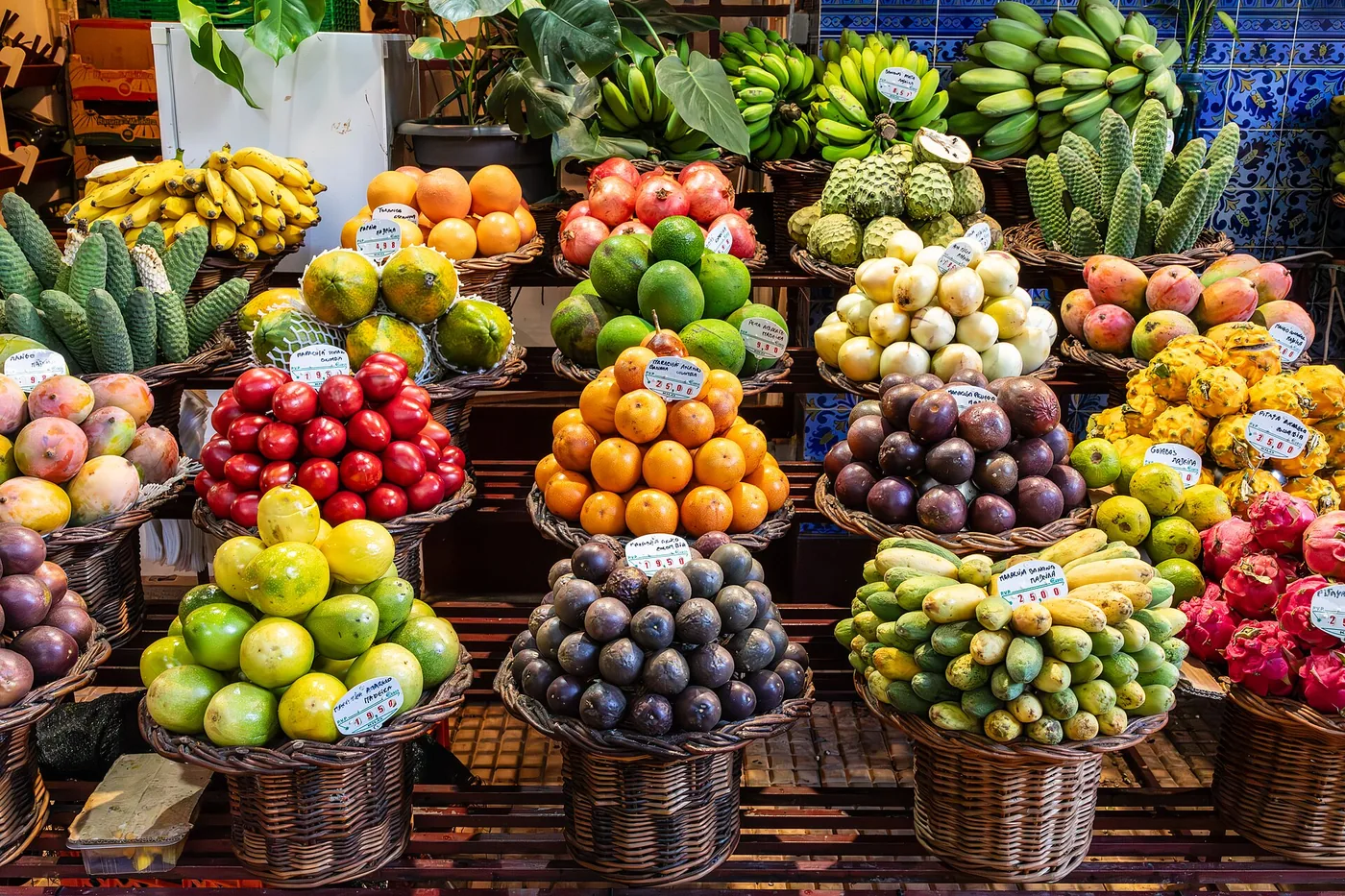
A fruit stall can be one of the most interesting small stops in a Madeira trip, especially when you ask what the fruit is called, where it was grown and when to eat it. Those three answers are more useful than buying a large bag because everything looks unfamiliar.
Start with a name you can recognise again
Anona is cherimoya; maracujá is passion fruit. Madeira’s food guide describes local passion-fruit varieties and recognises anona as a regional product. A name on a stall, however, is not proof that every piece on display was grown on the island.
Ask “Foi cultivado na Madeira?” if you want to know whether something was grown here. The question gives the seller a chance to explain the origin without you making an assumption from the setting. Imported fruit and local fruit can appear in the same shopping area.
Buy for the day you will eat it
Tell the seller whether you want to eat the fruit today or in a few days. A piece ready for an immediate snack and one intended for later are different purchases. If you are staying in a hotel without a kitchen, choose an amount you can realistically wash, prepare and eat.
Ask how to open an unfamiliar fruit rather than trying to judge from its colour alone. Visit Madeira specifically warns that fruto delicioso, the fruit of Monstera deliciosa, should only be eaten ripe. Do not improvise a preparation or ripeness test from a photograph; request a clear explanation from a knowledgeable supplier and leave it if you are unsure.
Clarify the price before the bag is filled
Ask whether the displayed amount is per kilo, per piece or for a pack. Then check the total for the quantity you have chosen. Comparing two prices without their units can make the cheaper-looking option the more expensive purchase.
If you are offered a tasting, establish which product it represents and whether the sample is sweetened or prepared. A tasting is a chance to learn what you like; it does not oblige you to buy more than you need. Take a little time and make the choice yourself.
Do not turn a fruit stop into another market checklist
At Mercado dos Lavradores in Funchal, use the visit to recognise names and ask questions. Elsewhere, a small greengrocer or producer may help you make a different comparison. Judge the actual fruit, origin and unit price rather than treating every seller in one market as identical.
If fruit flavours are your starting point, our poncha guide explains how to ask about a bar’s version of the drink. Fresh fruit and a prepared drink are separate choices; one does not prove the ingredients in the other.
For meals afterwards, the vegan Funchal guide helps with ingredient questions beyond the fruit stall. Buying local produce is useful, but it is not a substitute for confirming what goes into a restaurant dish.
Regional product names checked on 6 October 2026 against Visit Madeira’s regional-products page. Prices, origins and readiness to eat must be confirmed for the fruit you buy.
Featured photo: Dietmar Rabich · Source · CC BY-SA 4.0. Photo date: Taken on 14 November 2025, 10:32. Resized and converted to WebP; theme thumbnails may be cropped.

,_Mercado_dos_Lavradores_--_2025_--_0969.jpg)